How to Soundproof Home Office Door for Privacy: Step-by-Step Guide
Jump to section
Few things derail focus faster during a work-from-home day than household noise leaking through your workspace entrance. Whether it is background chatter from the living room, barking dogs, or family members accidentally overhearing confidential client calls, learning how to soundproof home office door for privacy is one of the most effective upgrades you can make to your daily remote setup. Most standard residential interior doors are lightweight, hollow, and leave wide air gaps around the frame, making them terrible at blocking speech and environmental sound.
Achieving true acoustic separation does not require building a studio-grade sound booth. By understanding how sound travels and applying targeted fixes—from simple rubber seals to solid door upgrades—you can drastically reduce noise leakage without spending a fortune. If you have already worked on reducing echo in your home office with soft furnishings, tackling the door is the crucial next step to secure complete conversation privacy.
How to soundproof home office door for privacy: Understanding Sound Leaks and Door Mass
To effectively block sound, you need to address two primary physical principles: mass and air sealing. Sound waves move through the air like water seeking a path of least resistance. In acoustics, any small unsealed space where sound escapes is called a flanking path. A tiny 1% air gap around a door frame can let through 30% to 50% of the acoustic energy in a room. This means even if you buy a heavy, high-end door, leaving a visible gap at the bottom or along the jambs will completely undermine its noise-blocking performance.
The ability of a barrier to stop sound is measured by its Sound Transmission Class (STC) rating. Standard interior doors in most US homes are hollow-core doors, constructed with thin hardboard shells over a cardboard honeycomb interior. These typically register at an STC rating of 20 to 25, which means normal conversational speech easily passes through them. Upgrading to a solid-core interior door—made of compressed wood composite or medium-density fiberboard (MDF)—boosts the baseline rating to STC 30 to 35. At this level, normal speech outside the room is reduced to an indistinct murmur.
Many home workers assume solid natural wood doors are the ultimate choice, but solid composite MDF doors are actually equal to or better than natural wood for sound attenuation. MDF is denser, entirely uniform throughout its core, and far less prone to warping due to humidity changes over time. When a solid-core door is combined with a fully sealed perimeter acoustic kit, overall performance can reach STC 38 to 45 or higher, providing confidential privacy for sensitive video calls and focused deep work.
The Light Test and Perimeter Sealing
Before buying replacement materials, you must locate exact air leaks. The easiest way to spot sound paths is to perform a simple light test. Turn off the lights inside your home office during the evening or close the window blinds. Have someone stand in the hallway outside with a bright flashlight aimed around the closed door frame. Anywhere light shines through into your darkened office is an opening where sound waves will freely pass.
Once you identify the air gaps around the perimeter jambs, installing compressive weatherstripping is the highest-ROI fix you can implement. Basic rubber or high-density neoprene weatherstripping typically ranges from $15 to $40 and takes less than thirty minutes to apply.
Clean the inner face of the door jambs thoroughly with rubbing alcohol to ensure strong adhesive bonding. Peel and stick the high-density silicone or rubber weatherstripping along the sides and top of the frame. Position the strips so that when the door latches closed, the door slab compresses the rubber tight against the stop molding without forcing you to strain the latch.
For persistent gaps around the outer door trim, inspect the joint where the wood casing meets your drywall. Builders often leave hollow gaps behind decorative trim. Applying a bead of non-hardening acoustical caulk between the frame trim and the wall seals hidden air paths that standard caulk misses over time as walls expand and contract.
Sealing the Bottom Gap with Heavy-Duty Sweeps
The gap between the bottom edge of the door and the floor or carpet is almost always the largest single acoustic breach in an office setup. Even if the top and sides of the frame are tightly sealed, an unsealed three-quarter-inch gap at the threshold will allow noise to pour into your room unobstructed.
To seal this area, you have two primary options based on your budget and whether you own or rent your home:
Surface-Mounted Silicone Door Sweeps: Generally costing between $15 and $40, heavy silicone or neoprene door sweeps screw directly into the bottom face of the door. Look for multi-layer silicone fins that flex gently over hardwood, tile, or low-pile carpet while creating a continuous physical barrier against sound waves.
Automatic Drop-Down Seals: Found in professional door seal kits priced around $100 to $250, automatic drop seals are mounted to the bottom of the door frame or mortised directly into the underside of the slab. When the door closes, a small plunger mechanism contacts the jamb, dropping a heavy neoprene gasket tightly against the floor threshold. When you open the door, the gasket retracts automatically, preventing carpet drag and wear.
- Perform the dark-room flashlight test to map all perimeter air leaks around the door frame.
- Clean jamb surfaces thoroughly before applying adhesive-backed neoprene or silicone weatherstripping.
- Install high-density seals so the door slab compresses the gasket firmly upon latching.
- Attach a heavy-duty multi-fin silicone door sweep or automatic drop seal across the bottom threshold.
- Seal exterior gaps between door trim casing and drywall using non-hardening acoustical sealant.
Upgrading the Door Slab for Maximum Mass
If you have completely sealed every air gap around your existing hollow-core door and still hear noticeable household noise, the door itself lacks sufficient mass to stop acoustic vibration. Hollow doors act much like an acoustic guitar body—resonating when hit by sound waves and re-radiating that sound into your workspace.
Replacing a hollow slab with a solid composite MDF door slab is the most effective permanent fix for home office privacy. A standalone solid-core door slab generally costs roughly $150 to $400, depending on styling, size, and finish. If you handle the hardware transfer yourself, it can be an affordable weekend DIY project. If you hire a professional carpenter to trim the slab and mortise hinge recesses, expect potential labor costs between $150 and $300.
When retrofitting a solid slab into an existing frame, verify that your door hinges are sturdy enough to support the added weight. Solid composite doors weigh three to four times more than hollow doors. You may need to upgrade light-duty hinges to 3.5-inch or 4-inch ball-bearing steel hinges and drive at least one 3-inch wood screw through each hinge leaf directly into the wall framing studs.
For maximum attenuation, high-end pre-hung acoustic door assemblies range from $800 to $2,500+. These engineered systems combine dense solid cores, factory-fitted perimeter seals, threshold drop seals, and heavy-duty frames into a single integrated unit capable of handling sensitive legal, medical, or financial work calls.
Renter-Friendly Tactics That Protect Your Deposit
If you rent an apartment or house, drilling into door frames or swapping out interior doors may not be allowed under your lease. Fortunately, several non-destructive modifications can significantly improve your privacy without risking your security deposit.
Heavy Acoustic Blankets and Curtains: Dense sound-absorbing blankets made from woven fiberglass core material or thick mass-loaded vinyl generally cost between $40 and $120. Hang an acoustic drape over the inside of the door frame using a sturdy tension rod or heavy-duty removable adhesive hooks. Ensure the blanket overlaps the door frame by several inches on all sides to seal perimeter gaps.
Removable Rubber Seals: Self-adhesive silicone weatherstripping can be removed at move-out time by warming the adhesive backing gently with a hair dryer and pulling slowly. Pair this with a slide-on twin draft stopper that clips under the bottom of the door without screws.
If you are working out of a converted space like a closet office, combining acoustic drapes with smart layout choices—such as positioning your desk microphone away from the door entrance—can make a noticeable difference in call clarity. For more compact workspace inspiration, explore our guide on building a functional cloffice setup.
Common Soundproofing Mistakes to Avoid
When setting out to quiet down a home workspace, it is easy to spend money on products that yield minimal results due to common acoustic misconceptions. Avoiding these errors saves both time and budget:
Relying on Acoustic Foam Panels for Noise Isolation: Lightweight egg-crate acoustic foam or polyurethane wedge panels are designed to reduce interior echo and room reverb. They absorb high-frequency sound reflections inside a room, but they lack the heavy mass required to stop sound waves from passing through a closed door into the hallway.
Overlooking HVAC Return Vents: Sound often bypasses a soundproofed door entirely through shared heating and air conditioning ductwork. If your door has a wide undercut specifically intended to allow HVAC airflow back to a central return, fully sealing it may strain your heating and cooling system. In such cases, installing a sound-baffled vent cover allows air movement while dampening noise transmission.
Neglecting Wall Construction: If your interior walls are uninsulated hollow drywall, sound will travel around even the heaviest sealed door. Combining perimeter door sealing with localized sound dampening—such as placing bookcases or acoustic wall panels along shared interior partition walls—helps balance your room's overall acoustic envelope.
Keep reading
Related Articles

Shared Two Person Home Office Layout Ideas: Desk Placement and Acoustics
Designing a functional two person home office layout requires balancing physical desk spacing, video call backgrounds, electrical loads, and acoustic isolation.
Wi-Fi 7 WFH router: Upgrading Your WFH Internet: Wi-Fi 7 Mesh Routers for High-Bandwidth Hybrid Roles
Learn how Wi-Fi 7 mesh routers eliminate video lag and slow file uploads for hybrid workers with high-bandwidth home office demands.
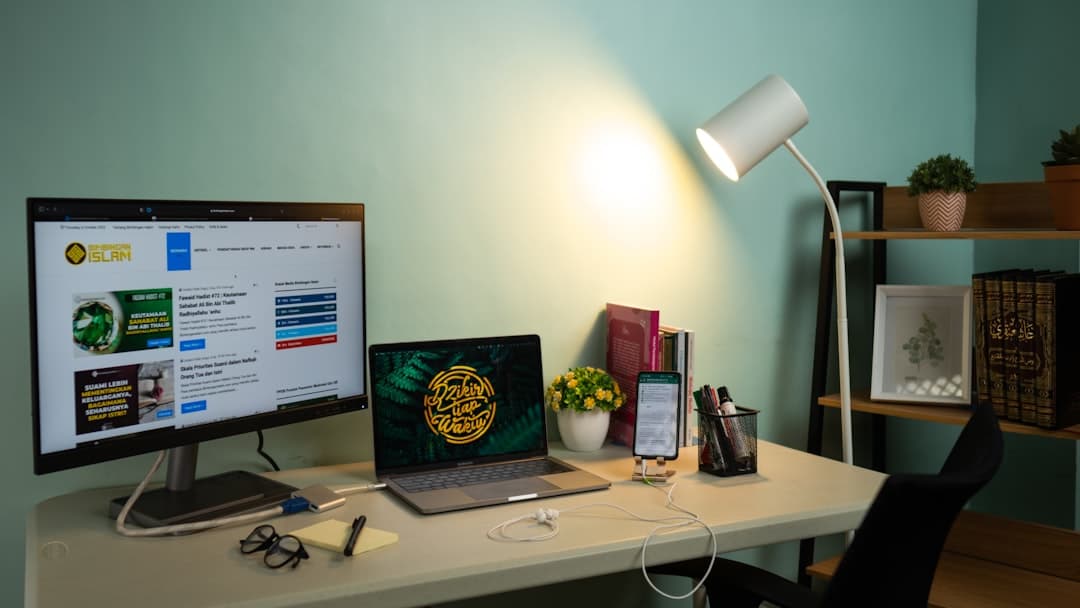
How to Choose Home Office Lighting for Video Calls and Reduced Eye Strain
Learn how to balance key lighting, color temperature, and ambient light to look clear on camera while reducing visual fatigue during long remote workdays.